- JP
- EN


Integrated Production System × IoT
Aikitec is committed to pursuing further production efficiency.
Aikitec’s core strength — it’s fully integrated manufacturing system covering forging, turning, heat treatment, and finishing— has been further enhanced through the introduction of IoT technology.
Three key advantages made possible by integrated production × IoT.

High quality
By managing production with IoT while completing all processes in-house, we establish a comprehensive management system across every stage, enabling us to consistently deliver high-quality products.

Low-cost production
By reducing intermediary margins, we are able to offer products at more competitive prices than conventional manufacturing model.

short delivery lead time
By managing equipment operation internally via IoT while completing manufacturing, we can create a smooth and efficient production schedules, enabling us to deliver within a shorter lead times than usual.
INTEGRATED PRODUCTION SYSTEM
By using materials with the billet weight reduced to the absolute minimum and machining only the necessary areas, combined with in-house normalizing and carburizing processes, we are able to shorten lead times for each manufacturing stage.
Furthermore, by designing and manufacturing forging dies and jigs in-house, we achieve optimal material selection and rapidly reflect improvements identified during prototyping back into the design process, thereby establishing a manufacturing system that delivers products our customers can fully trust.
Forging, turning, heat treatment, and finishing can all be completed within a single site.
Forming
Steel bar cutting
Hot forging
Normalizing
Cold forging
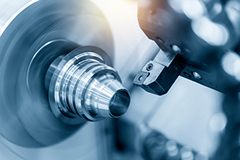
Cutting process
Turning
Broaching
Machining
Gear Machining
Hobbing
Gear chamfering
Shaving process
Gear shaping
heat treatment
Carburizing and quenching
shot blasting
Shot peening
Induction hardening
Grinding
Internal diameter end face grinding
Gear honing
Tooth Flank Grinding
Inspection and Shipping
Meshing Inspection
Visual inspection
Packaging
スクロールできます
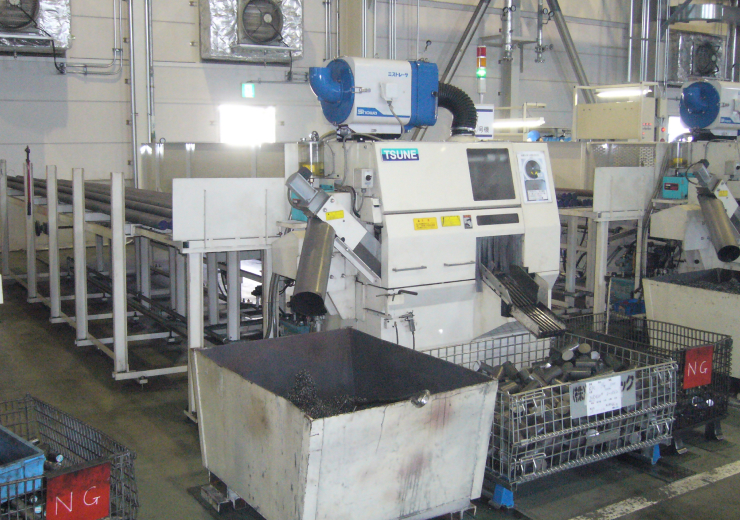
Steel bar cutting
To perform hot forging, steel bar is cut to match the shape and weight (g) of the product material.
Forming
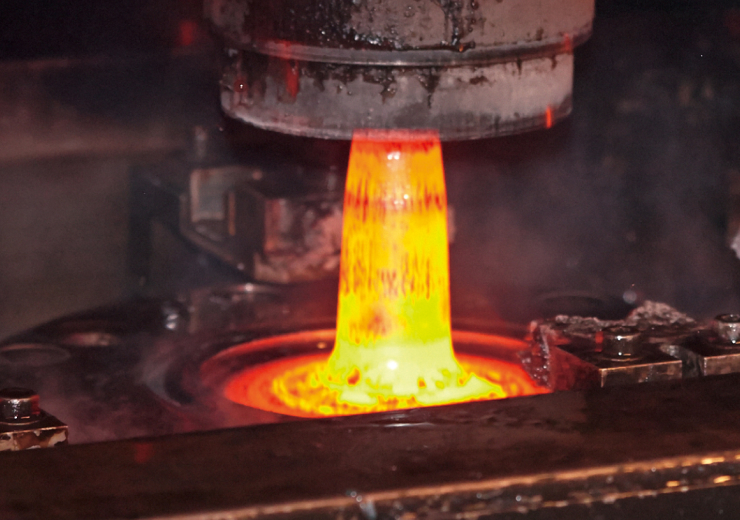
Hot-forged
Hot-forged steel is heated to high temperatures and then pressed and shaped in a press machine. This process refines the microstructure and forms forging flow lines, thereby enhancing component strength.
Forming
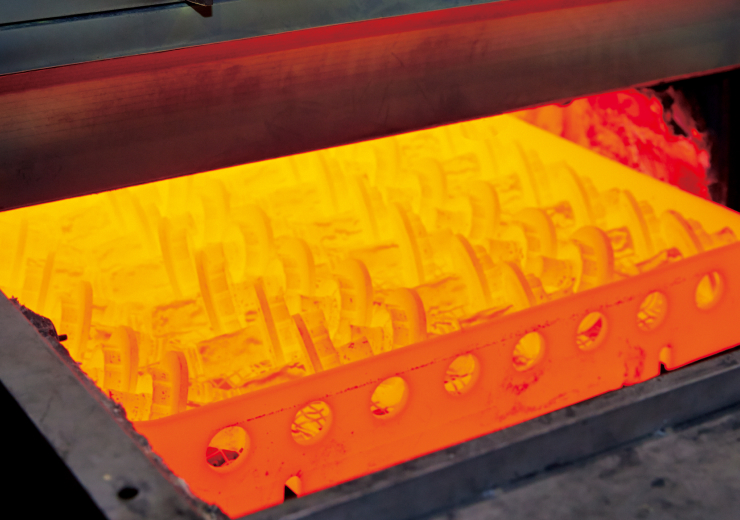
Normalizing
This heat treatment process homogenizes the composition throughout the entire structure and refines the grain size, thereby improving machinability in subsequent processes.
Forming
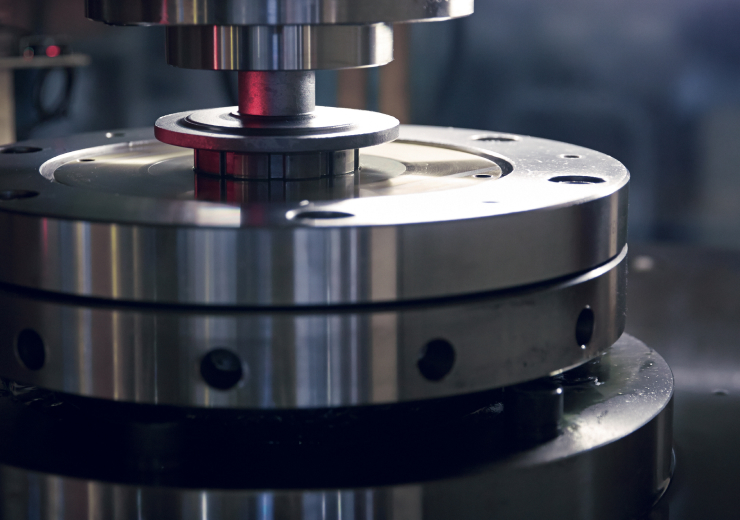
Cold forging
This process involves pressing and forming at room temperature using a press machine. It is a precision forging method that achieves excellent shape, dimensional accuracy, and surface finish in the formed area.
Forming
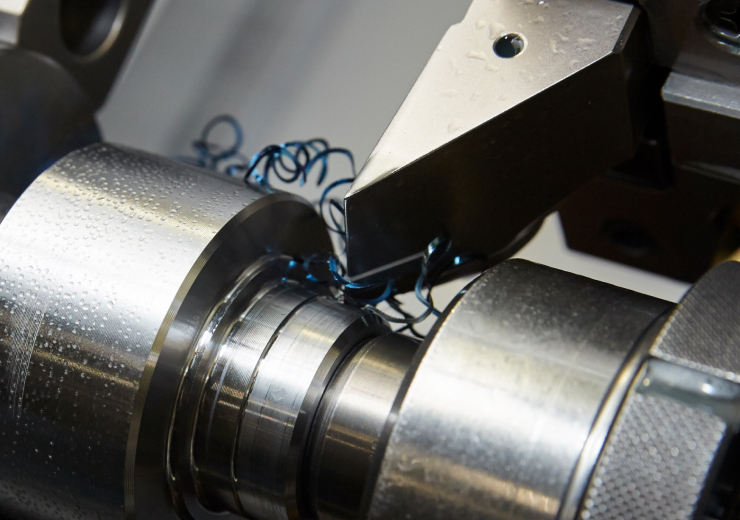
Cutting process
Unnecessary portions are machined away from the forged shape to achieve the required form and dimensions.
Cutting process
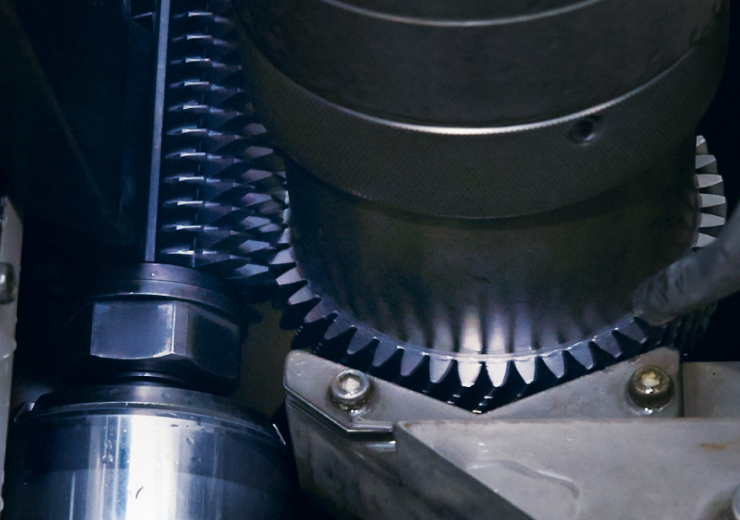
Tooth Cutting/Shaving
We perform shaving machining using specialized cutters to generate the gear tooth profile and achieve a smooth finish on the tooth flank.
Gear Machining
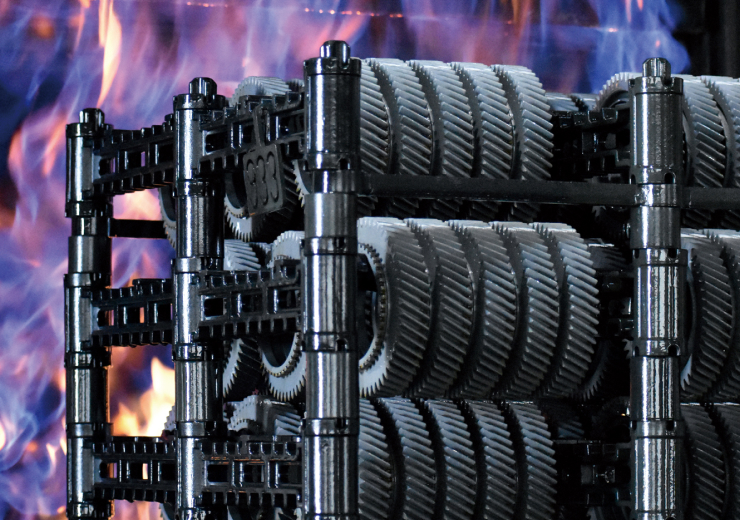
Carburizing and quenching
Through heat treatment that diffuses carbon into the steel surface, the surface becomes hard while the core remains soft, achieving both wear resistance and toughness.
Heat Treatment
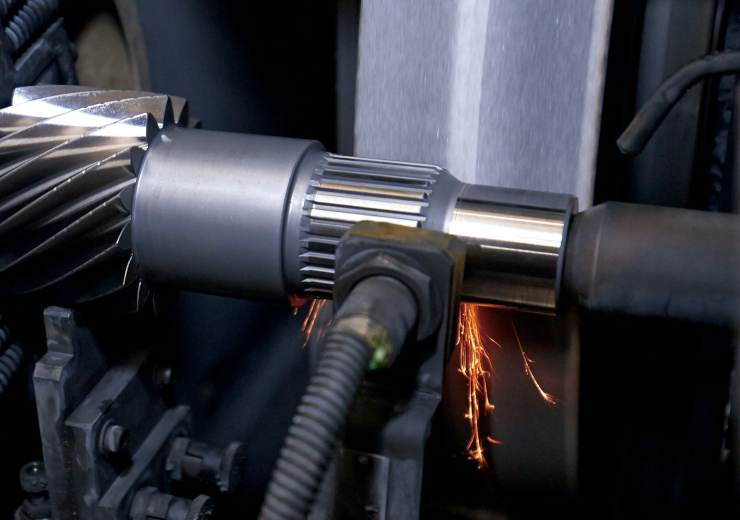
Inner Diameter・Outer Diameter・End Face Grinding
This is a finishing process that ensures the required dimensional accuracy on reference surfaces such as end faces, inner diameters, and outer diameters after heat treatment.
Grinding
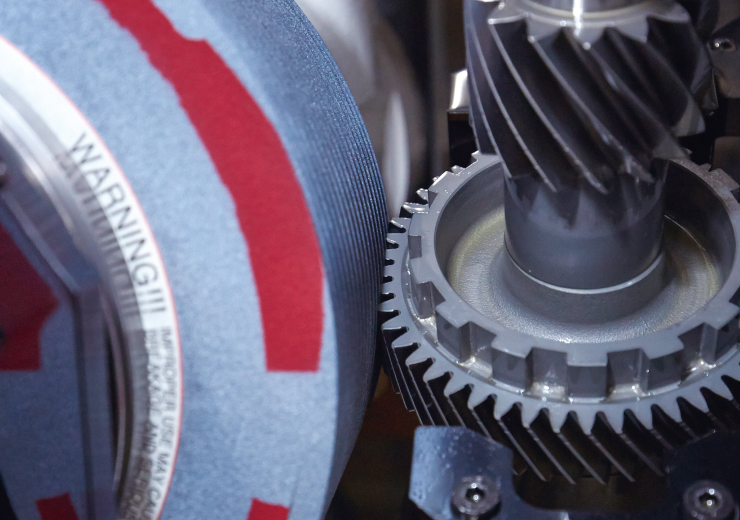
Gear grinding
This is a tooth flank grinding process using a screw-shaped grinding wheel to finish the tooth flank to dimensions in the micron (μ) range.
Grinding
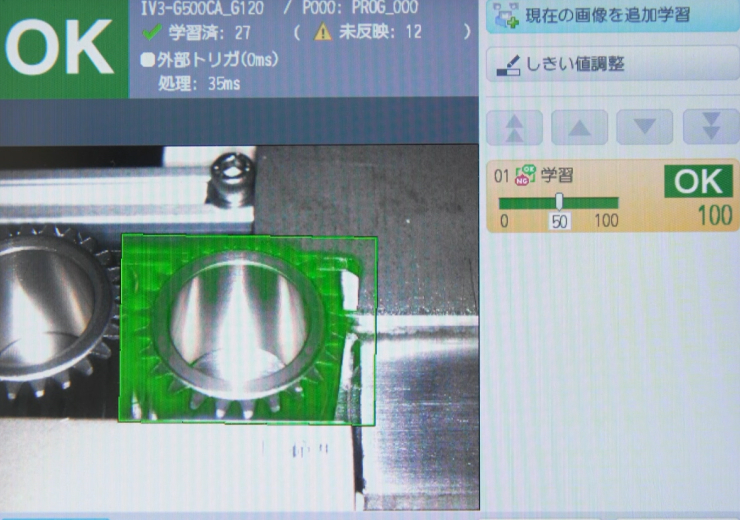
Shipping Inspection
To ensure that our products meet required standards, we conduct inspections using various inspection equipment.。
Inspection and Shipping
IoT: Visual Management, Predictive Maintenance
We are working to establish an even more highly efficient production system through the utilization of IoT and the enhancement of manufacturing technologies.
IoT: Visual Management, Predictive Maintenance
●Quality and Equipment Timely Monitoring
●Scheduling of Incoming and Outgoing Operations
Scheduling of Incoming and Outgoing Operations
●Minimization of man-hours and processes
●Incorporation of the fastest machining technology
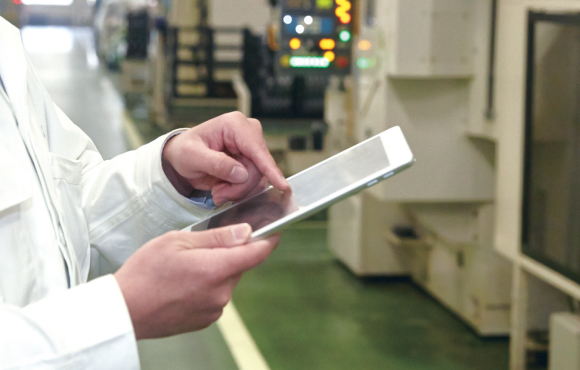
UNIQUE NEW SYSTEM
Visualize equipment operational status
Simple Production Management System
Acomos, developed in-house by Aikitec
Equipment Operation Monitoring System “Acomos”
“Acomos” is a simple production monitoring system developed by Aikitec, designed to visualize equipment operating status.“Acomos” can be installed on all equipment, regardless of age. It allows for easy addition of new features and customization, and can flexibly address issues specific to each piece of equipment or process, supporting continuous improvement in QCD (Quality, Cost, and Delivery).
Furthermore, when equipment stops, it immediately detects and displays abnormalities, prompting a swift response to reduce “downtime losses.”As an additional feature, it measures the power consumption of monitored equipment, contributing to CO₂ reduction by curbing unnecessary power usage.

The alert function provides real-time notifications for equipment stoppages, enabling immediate investigation and corrective actions to the cause.
As a result, stable and reliable production is achieved.
Analysis Technology of AIKITEC
In the forming and heat treatment processes,
we conduct simulation analysis
to optimize production efficiency and improve product quality.
FORGING SIMULATION ANALYSIS
Using advanced simulation technology to reproduce and optimize the forging process of metal components on computers,
we enhance overall forging efficiency and improve product quality.
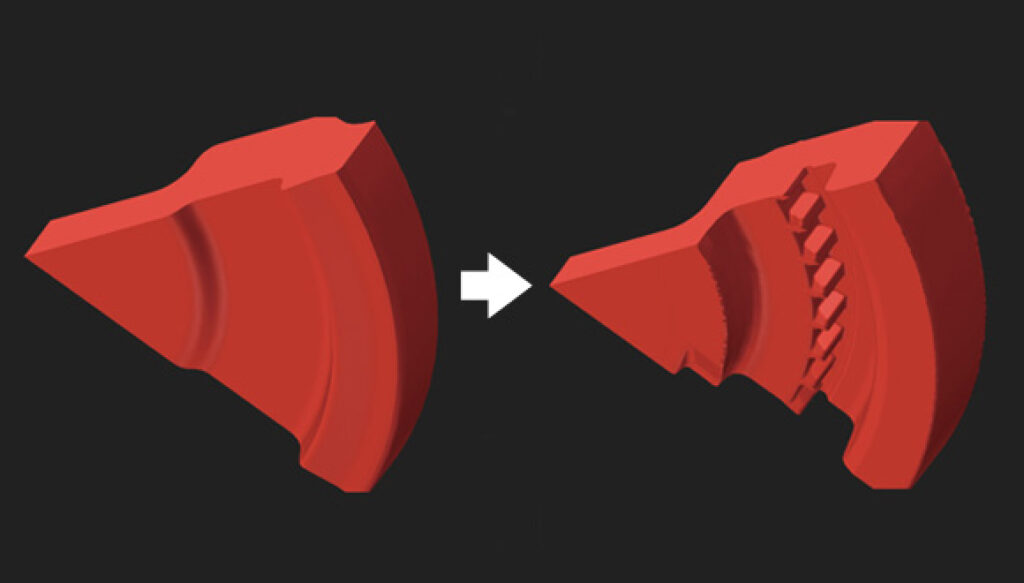
Forming Simulation
Case Study: Spline Tooth Forming Analysis
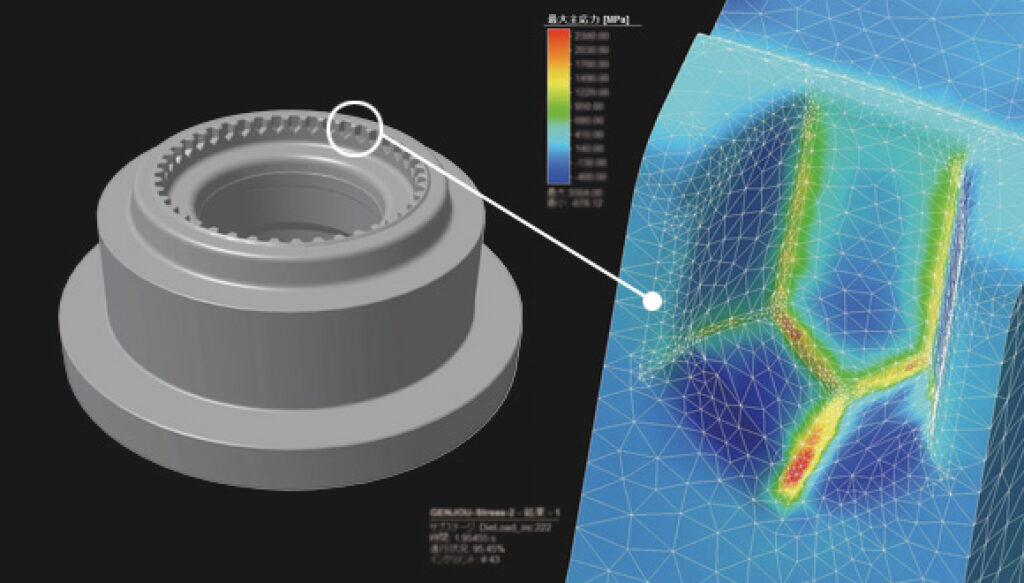
Die Stress Analysis
Case Study: Load Analysis of the Dog Tooth Forming Area
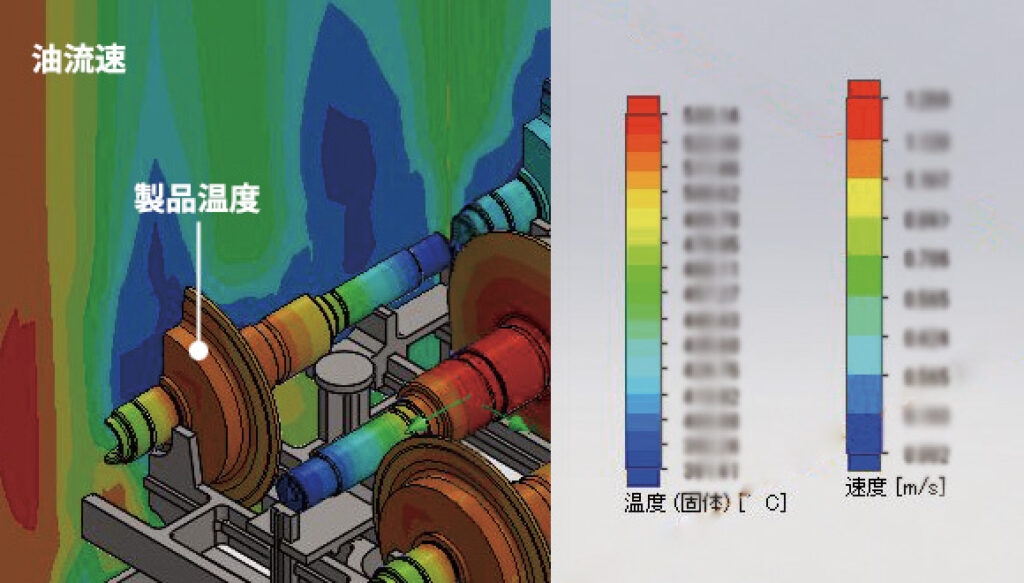
FLUID ANALYSIS
By utilizing fluid analysis in the carburizing and quenching process,
we help improve heat treatment quality and optimize the process.